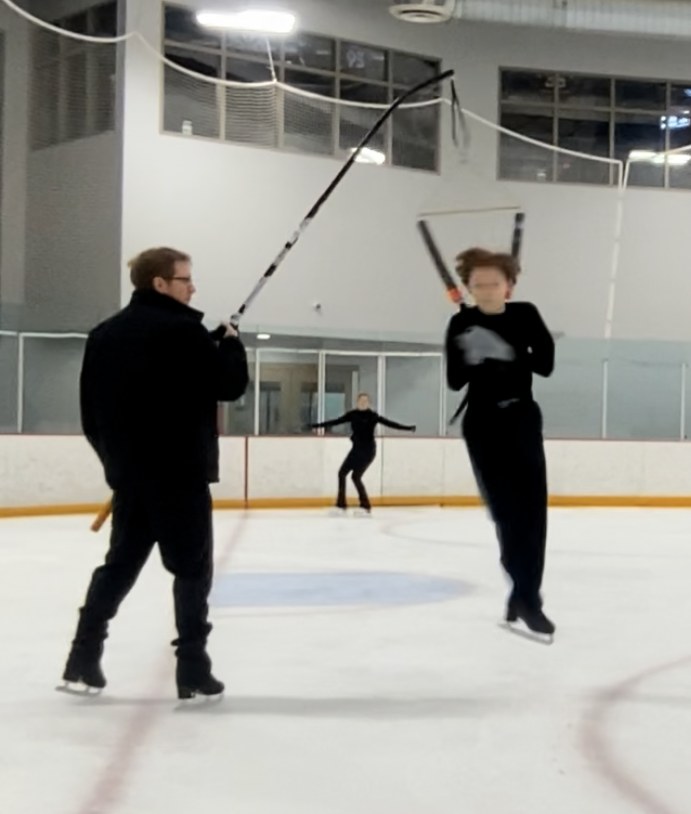
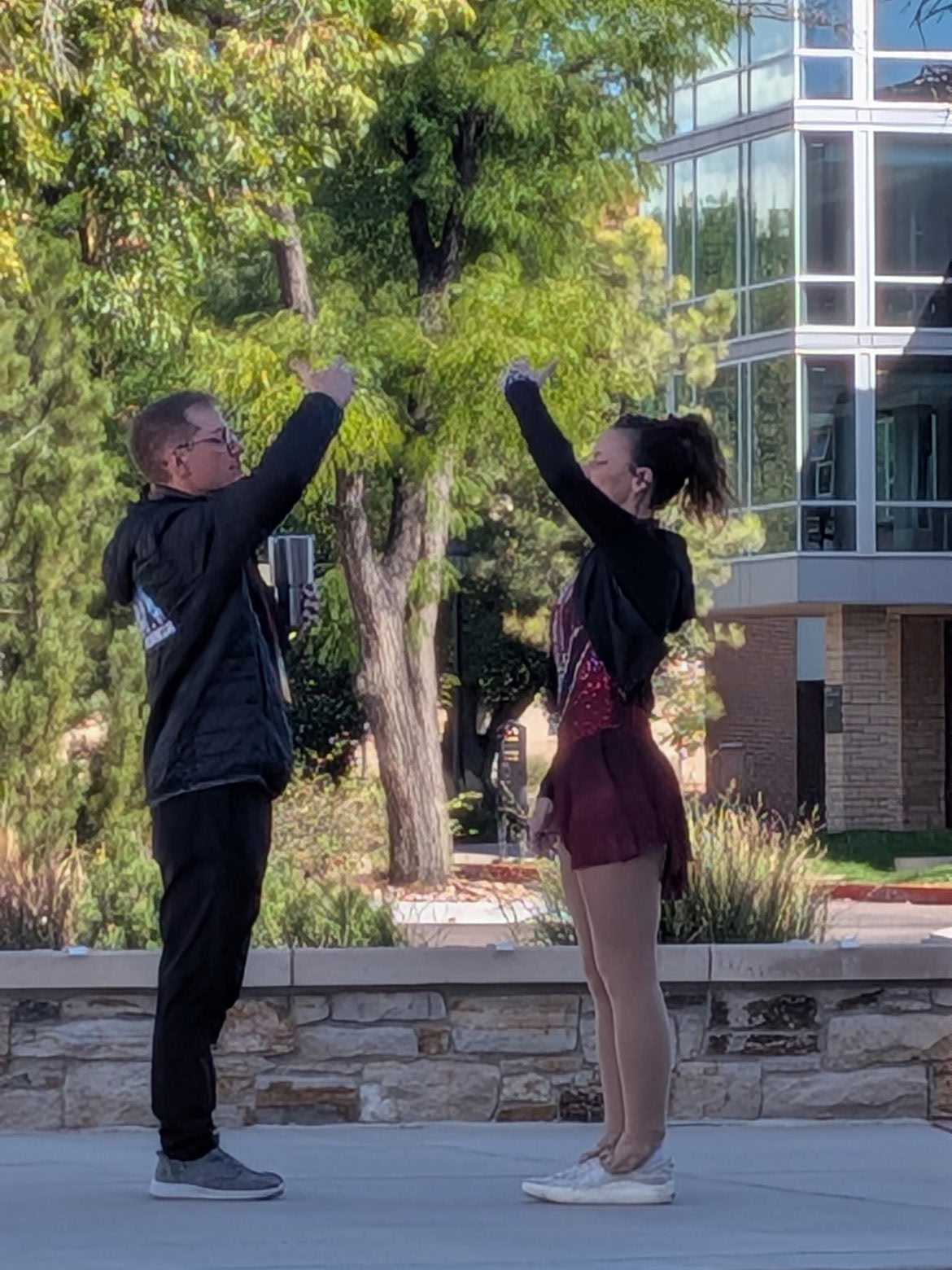
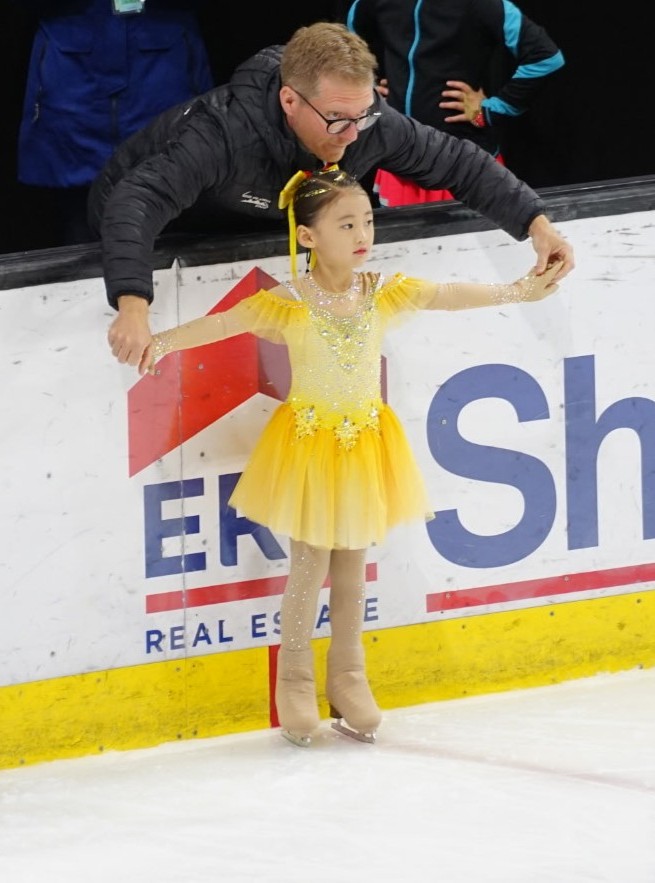
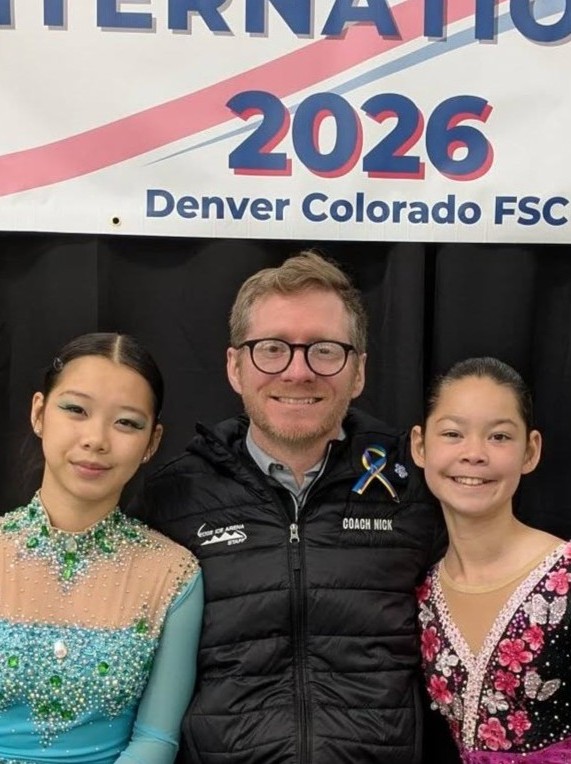
I’m Coach Nick. I help skaters understand technique, practice with purpose, and grow into confident, capable athletes—from their first steps to competitive skating.
Edge Ice Arena · Beginner through competitive figure skating
TRIPLE MASTER ACCREDITED COACHGroup Instruction · Skating Skills · Program Direction
U.S. FIGURE SKATINGGold Medalist · Get Up Ambassador
Coaching options
Ways to train with Coach Nick
You don’t need to be an advanced skater to begin. My coaching is a strong fit for skaters and families who value consistent practice, steady development, and building from one lesson to the next. We’ll consider your skater’s age, experience, interests, and your family’s schedule to find the right coaching structure.
Individual attention
Private lessons
Focused instruction for your skater—from first steps and foundational skills to jumps, spins, and new challenges.
$90 / hour
15 minutes
$22.50
20 minutes
$30
30 minutes
$45
45 minutes
$67.50
Additional services
Goal / progress meeting$40 flat
Standard program music edit$40 flat
More ways to develop
Small-group coaching
Guided practice, repetition, and the chance to learn alongside other skaters. Ask about compatible groups and availability.
$50 / hour per skater
15 min $12.50 · 30 min $25 · 45 min $37.50
Off-ice / electric spinner
Supporting work to develop strength, coordination, and skating technique, matched to the athlete.
$40 / hour per skater
15 min $10 · 30 min $20 · 45 min $30
Coaching fees are separate from rink admission and skate rental.
Monthly coaching plans
Weekly coaching and supporting training in one monthly plan.
Plan pricing is based on standard on-ice coaching rates and includes Coach Nick’s off-ice classes, spinner sessions, progress meetings, and music support.
Development Plan
Consistent weekly coaching and supporting training to build strong skills and productive practice habits.
Weekly coaching
60 minutes private coaching
30 minutes on-ice small-group coaching
$500 / month
Paid in full: $500Due on the 1st
or split your payment
$260 on the 1st + $260 on the 15th$520 total when split
Performance Plan
More weekly coaching for skaters whose goals and training demands call for additional technical work and feedback.
Weekly coaching
90 minutes private coaching
45 minutes on-ice small-group coaching
$750 / month
Paid in full: $750Due on the 1st
or split your payment
$390 on the 1st + $390 on the 15th$780 total when split
Built-in support with both plans
Progress & goal meetings · at least two per coaching year
At least two scheduled progress/goal meetings during the coaching year, plus additional informal check-ins as appropriate to the skater and training plan. Prepare your goals and practice priorities →
Program music editing · included as needed
Program music editing is included as reasonably needed for the skater’s agreed competitive programs and development. The amount varies with the skater’s competitive track, progress, and number of programs rather than being a fixed number of edits.
Off-ice & electric spinner · included
Coach Nick’s own scheduled off-ice classes and electric-spinner training are included in the monthly plan. These are typically scheduled about twice weekly when the calendar allows, but frequency may vary with competitions or tournaments, rink scheduling, appointments, meetings, holidays, and other coaching or calendar conflicts. Explore warm-up and off-ice guidance →
This inclusion applies to training taught by Coach Nick. Freestyle ice, rink-run programs, outside specialists, choreography, third-party coaching, test/competition coaching, and other outside services are not automatically included.
Availability: Plans require available coaching time and a compatible small group. We’ll confirm your schedule before enrollment.
Extra lessons: Additional lessons—including recurring extras—are paid separately at standard rates when taught, subject to availability.
Building skaters
Progress that lasts beyond the lesson
Progress grows between lessons, too. I help skaters connect what they learn with a clear practice focus, understand why a technique works, and learn to notice and adjust their own skating. The goal is increasing skill, confidence, and ownership.
Clear progressions and feedback help skaters build reliable skills instead of simply repeating attempts.
Independent athletes
Skaters learn how to practice productively, ask useful questions, and take increasing responsibility for their development.
Room to enjoy it
Serious training and enjoyment belong together. Persistence, confidence, relationships, and curiosity are part of the process.
Training philosophy
A lesson is part of the plan—not the whole plan
Meaningful development comes from a combination of good instruction, purposeful repetition, and the right supporting work for the individual skater.
Private coaching
Technique + feedback. Focused instruction shaped around current skills, goals, and training priorities.
Independent practice
Repetition + ownership. For skaters ready to practice safely and productively, a useful starting point is roughly three times as much independent practice as lesson time. Practice with purpose →
Group + off-ice
Repetition + athletic development. Group instruction, off-ice work, and specialists can add important layers to a skater’s development.
More training is not automatically better training.
Volume should increase gradually, with recovery, sleep, fueling, school demands, growth, and the individual skater taken into account. Quality, consistency, and intention matter more than simply accumulating hours. A training session is generally about 45–60 minutes. Recovery and reset guidance →
One example of how training volume may develop
These are developmental guidelines, not requirements. Training should be adjusted for the skater’s age, level, goals, schedule, recovery, and family.
Stage
Days / week
Sessions / day
Coached instruction / week
Off-ice
Learn to Skate
2
1
1 class + optional private lesson
1–2 activities
Academy Prep / Aspire
3
1, progressing toward 1–2
1–2
1–2 structured sessions
Pre-Preliminary / Preliminary
3–4
1–2
2–3
2–3 sessions
Pre-Juvenile / Juvenile
4–5
1–2, progressing toward 2–3 as appropriate
3–4
3–5 sessions
Intermediate / Novice
5
2–3
4–5+
4–5 sessions
Junior / Senior
5–6
Up to 3
Individualized, often 5+
5+ sessions
What counts as coached instruction? Private lessons, small-group and off-ice classes, skating skills, spins, choreography, jump technique, ice dance, harness work, and appropriate specialist coaching can all contribute. Instructor-led activities beyond skating—such as ballet and other dance styles, ballroom, gymnastics, aerial arts, yoga, and Pilates—can also support coordination, strength, mobility, and artistry as part of a well-rounded athlete’s development.
About Coach Nick
Experience shapes how I teach
My background is in grassroots skating: introducing skaters to the sport, developing them into competitive athletes, and building programs that help skaters and families navigate each stage of that progression. I’ve led programs in privately owned, municipal, and parks-and-recreation rink environments, which has taught me to adapt while keeping skater development and well-being at the center.
My coaching combines a systematic approach and a strong foundation in skating skills with creativity. I want skaters to understand what they’re doing, why they’re doing it, and how to keep improving—while developing persistence, confidence, teamwork, and room to enjoy the sport.
I believe there is always more to learn. Beyond the rink, I’ve written for The Professional Skater, presented at clinics, and maintain a curated Dartfish learning library of more than 2,300 skating clips. I’m continually studying technique, movement, and teaching methods to find clearer explanations and better progressions for my athletes.
Skating is more than checking off skills. It’s a place to build resilience, relationships, and the confidence to get back up and try again.
Experience
19 years coaching · Program leadership since 2013 · Coaching at Edge Ice Arena since 2017
Coach accreditations
U.S. Figure Skating Core Certified Coach · Master Accredited in Skating Skills, Program Direction & Group Instruction · Level 2 Singles
Safety & athlete care
SafeSport Trained · First Aid/CPR Certified · HEADS UP Concussion Trained
Competitive background
U.S. Figure Skating Gold Medalist, Skating Skills · Regional competitor
Athletes coached
U.S. Figure Skating Gold Medalists · National Qualifying Series, National Showcase & Excel Series competitors
Education
Bachelor’s degree in Journalism · University of Memphis
Beyond the rink
U.S. Figure Skating Get Up Ambassador · Author for The Professional Skater · Clinic presenter · 2,300+ curated Dartfish skating clips
“Your energy, encouragement, and dedication have made such a difference in her enthusiasm for skating. Thank you for pushing her to improve while making every lesson fun and motivating.”
— Skating parent
“You constantly push me to do better and you always see the potential in me that I sometimes can’t.”
— Skater
“I am so glad to share the joys (and pains) of the process with someone who cares as much as you do.”
— Skating parent
FAQ
Before you get started
Do you teach beginners?
Yes. I work with skaters across all ages and levels, from skaters just getting started through advanced testing and competitive development. From the beginning, I focus on useful technique, good habits, and helping skaters become comfortable taking ownership of their skating.
Do you teach hockey skaters?
I teach foundational skating to future hockey players—not stick-and-puck instruction. For specialized hockey and power-skating work, check out Precision Power Training.
How long should a lesson be?
Thirty to 45 minutes works well for many skaters. A 15–20 minute lesson can focus tightly on one skill, while longer lessons can be divided among several focal areas.
Are private lessons enough?
Usually not for meaningful ongoing development. Independent practice, group instruction, off-ice work, and specialist coaching can all contribute as appropriate.
How do we get started?
Send a coaching inquiry with your goals and availability. I’ll reply by email or text, according to your preference. If our schedules align, we arrange a conversation or a first lesson at my normal rate, then choose an appropriate coaching option. Ask about coaching →
My skater wants to compete. What does that involve?
Competitions are available at many levels, and they can be a lot of fun. Readiness is less about reaching one specific level or winning every event and more about wanting the experience, being prepared, and practicing consistently outside lessons. As skaters advance, training becomes more structured and may include multiple skating days, private coaching, independent practice, group instruction, off-ice training, power-skating classes, and specialist coaches. We compete for the love of skating, focusing on what we can control: preparation, effort, and how we respond to challenges. Competitive athletes are expected to participate in appropriate rink power-skating classes as part of their training plan.Competition preparation and packing checklist →
Do you work with other coaches or specialists?
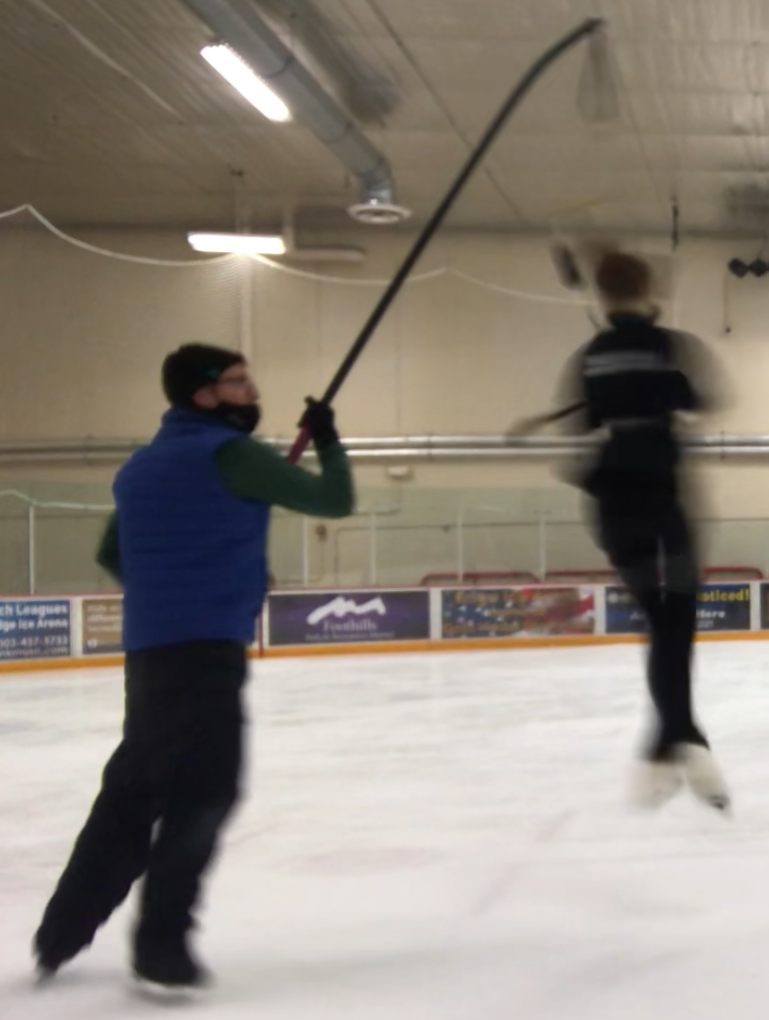
Yes. I work as both a primary and secondary coach, and team teaching can be an important part of development. When I’m the primary coach, I coordinate overall training, testing, and competition preparation. My primary areas are skating skills and singles skating, and I commonly collaborate with or refer to specialists for choreography, ice dance, and additional skating-skills work. I also work as a specialty coach within other skaters’ teams, including pole-harness jump work. The goal is for everyone’s work to support the same overall plan. If your skater already has a primary coach, please speak with them before arranging additional coaching as a professional courtesy and to keep the coaching team aligned.
What should we know about skates and sharpening?
Proper fit and figure-skate-specific sharpening are essential. Have skates professionally fitted whenever possible, and use a professional experienced with figure blades for sharpening. Avoid big-box chain stores and sharpening devices designed specifically for hockey skates. Edges & Dreams at South Suburban Sports Complex is a reputable local figure-skating shop.
A useful sharpening starting point is about 20–30 skating hours, though needs vary with the blade, ice conditions, training, and preference.
Already skating with me? Find calendars and rink check-in instructions in Skater Resources →
Lesson policies
Clear expectations make training easier
Payment & account standing
Regular lesson payment is due at the end of each lesson, or by the final lesson of the week for multi-lesson skaters. Cash, Zelle, Venmo, and PayPal are accepted. Monthly plans are due on the 1st, or on the 1st and 15th for split payment. A $10 billing follow-up fee applies when lesson charges remain unpaid at week’s end; a $30 late fee applies after 10 days. Coaching pauses when an account is 30+ days past due and resumes when current.
Cancellations, illness & late arrivals
Please provide at least 24 hours’ notice if you need to cancel. I know illness and emergencies can happen without warning. If something unexpected comes up, please check my coaching calendar and suggest a time in the following week that works for your family. I’ll make a reasonable effort to arrange a make-up when my schedule allows. A make-up is in addition to the regular lesson and does not shift the recurring schedule. If the reserved time cannot be rescheduled or filled, the original charge still applies. Repeated or avoidable last-minute cancellations may be charged without a make-up option. Lessons end at the scheduled time if a skater arrives late. If I or the rink cause a late start, we’ll extend or adjust when possible. There is no charge if I cancel an individual lesson.
Monthly plans & calendar changes
Families may switch between a monthly training plan and à-la-carte coaching. Monthly plans reserve an ongoing training schedule rather than a bank of individual sessions, so the monthly price remains unchanged if a skater misses a scheduled session. I’ll make a reasonable effort to offer make-up time when scheduling allows.
If I need to cancel a scheduled session, I’ll arrange reasonable make-up time. Rink closures, holidays, competitions, and other calendar changes are a normal part of skating, and I’ll make reasonable efforts to preserve the planned training schedule whenever possible. Months with a fifth recurring training week do not result in an additional charge.
Competition, test & travel coaching
Please confirm my availability, the skater’s events, and level before registering for a competition, test, or practice ice. Each competition event or in-person test is billed at the one-hour private lesson rate; practice ice is prorated to session length.
Local Denver-area travel is waived unless discussed before registration. For out-of-town events, reasonable accommodations, transportation or mileage, and meals are shared among participating skaters.
Longer events or those requiring substantial travel may also require an advance deposit, credited toward the final competition coaching bill, and an additional coaching fee to account for regular lessons displaced by travel. Any deposit or additional coaching fee will be discussed before families commit.
Get started
Ready to build what comes next?
Tell me a little about yourself or your skater, your skating goals, and when you’re generally available. New to figure skating? It’s okay if you’re not sure which option fits yet.
For skaters under 18, a parent or guardian should submit the coaching inquiry.
What happens after you inquire?
I review your goals and availability, then reply by email or text, according to your preference. New lessons depend on finding a match with my current openings.
If our schedules align, we arrange a conversation or a first lesson at my normal rate.
From there, I recommend a coaching option that fits your skater’s goals and schedule.